Flora Philip’s story is quieter than those of Elsie Inglis or Sophia Jex-Blake. There was no riot, no battlefield and no famous scientific theory. Her significance lies in a different stage of institutional change: she was educated through a parallel system created for women, became the first female member of the Edinburgh Mathematical Society before women had normal access to university degrees, and then joined Edinburgh’s first cohort of female graduates.
Her life shows what happens after campaigners begin forcing doors open but before equality becomes ordinary.
Birth and the source problem
Flora Philip was born in Tobermory on the Isle of Mull on 19 May 1865. The date matters because modern University of Edinburgh material is internally inconsistent: headings identify her as 1865–1943 while some body text gives 1863.
The MacTutor History of Mathematics archive at the University of St Andrews explicitly cites Philip’s birth certificate and records 19 May 1865. That is the better-supported date.
This is a useful reminder that institutional websites are authoritative sources, but not infallible ones.
A university system that did not yet fully admit women
Philip was educated at Tain Academy and moved to Edinburgh in 1883. Women could not simply enrol at Edinburgh on the same terms as men.
Reformers therefore built alternatives. The Edinburgh Association for the University Education of Women developed from the Edinburgh Ladies’ Educational Association founded in 1867. It persuaded university professors to teach women, established university-level courses and created certificates for achievement.
This was a different strategy from Jex-Blake’s direct confrontation with the university. It worked gradually through institutional relationships, but both approaches contributed to eventual change.
Philip entered that parallel educational world.
Mathematics
She studied English literature, moral philosophy, mathematics and physiology. Mathematics became particularly important, with teaching connected to figures such as George Chrystal.
In December 1886 Philip became the first female member of the Edinburgh Mathematical Society, founded only three years earlier.
She remained its only female member for about seven years.
The chronology is striking: a professional mathematical society recognised her before the university system could award her an ordinary degree.
Fact or Folklore: Was Flora Philip a great research mathematician?
The surviving evidence does not support placing her alongside major original researchers such as Maxwell. Her historical importance lies in advanced mathematical education, teaching and institutional access rather than a major body of published mathematical discovery.
Inflating her research record would obscure the real achievement.
Certificates without degrees
On 22 April 1885 Philip received an Edinburgh University Certificate in Arts after courses including mathematics. In 1888 the Association awarded her a diploma after she passed seven subjects.
These were genuine academic achievements, but they were not ordinary university degrees. Women could study under university professors, pass assessments and demonstrate competence while remaining outside the full degree structure.
The institution had created a halfway status: educated enough to pass university-level work, but not yet institutionally equal.
Teacher
Philip trained at St George’s Training College for Women Teachers and qualified in 1889. She became an assistant mistress at St George’s High School for Girls in Edinburgh.
Women’s higher education and girls’ schooling reinforced one another. Women educated through alternative institutions could become teachers, who then educated another generation of girls. The impact therefore spread far beyond the individual graduate.
The law changes
The Universities (Scotland) Act 1889 created a legal route toward reform. New regulations eventually allowed women to graduate from Scottish universities.
Philip had already done much of the work. The university eventually caught up with the student.
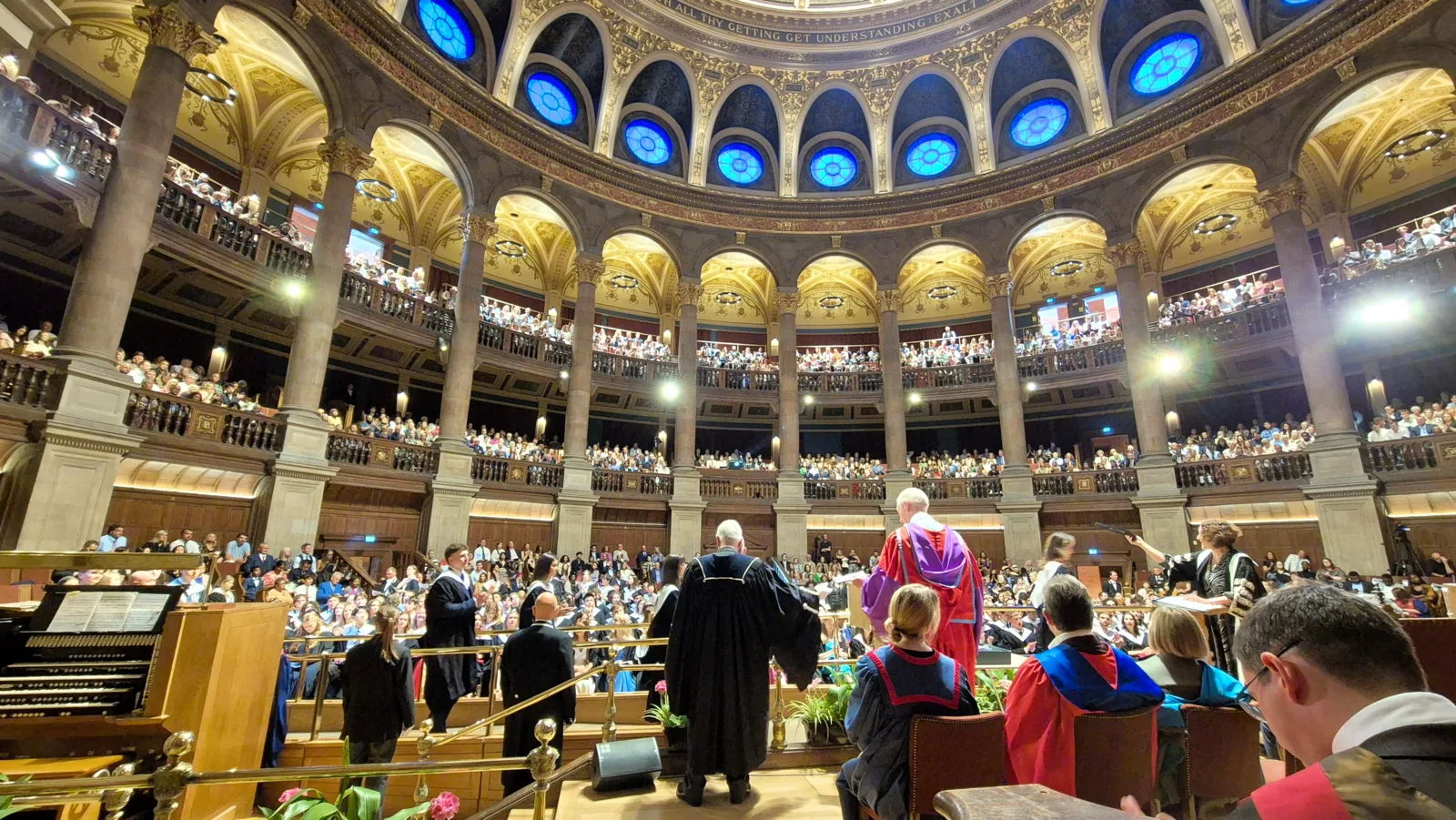
On 13 April 1893, eight women graduated from the University of Edinburgh. Flora Philip was one of them. Contemporary accounts record public interest because female graduates were still considered unusual enough to attract spectators.
Fact or Folklore: Was Philip Edinburgh’s first woman graduate?
Not alone. She was one of eight women in the historic first female graduating cohort.
That collective framing matters. “First woman” storytelling often erases the other women standing beside the best-remembered individual.
Marriage and withdrawal from professional mathematics
In 1893 Philip married Edinburgh solicitor George Stewart. She left teaching and resigned from the Edinburgh Mathematical Society.
There is no evidence that the Society expelled her or that her husband formally forced her out. It would be wrong to invent coercion unsupported by the record.
But the social context matters. Marriage frequently coincided with the end of visible professional careers for women of Philip’s generation. Education could be opening while expectations around married women remained restrictive.
Her documented professional record becomes much quieter after marriage.
Fifty years later
In 1943 the University of Edinburgh marked the fiftieth anniversary of the first women graduates. Philip returned to the university with surviving members of that original cohort.
The reversal was dramatic. In 1893 women receiving degrees were still enough of a novelty to attract a crowd. Fifty years later women had become a normal part of university life.
Philip died in Edinburgh on 14 August 1943, only weeks after the anniversary ceremony. She was 78.
Modern legacy
In 2022 the University of Edinburgh School of Mathematics established the Flora Philip Fellowship, designed for early-career researchers from groups under-represented in the mathematical sciences.
The choice of name is appropriate. Philip entered mathematics at a time when women were structurally under-represented because institutions had excluded them. More than a century later her name is used for a programme intended to widen participation.
SÙIL ALBA view
History remembers people who smash doors more readily than the people who walk through once the lock has finally begun to break.
Philip did not create the campaign for women’s higher education. She benefited from women such as Mary Crudelius, Sarah Mair and the Edinburgh Seven, from sympathetic professors, from political reform and from institutions built outside the university.
But her sequence tells the story of transition perfectly: advanced study before full admission, professional mathematical membership before a degree, teaching before formal university recognition, then graduation once the law changed.
The talent was already outside. The institution was late.
Flora Philip — 19 May 1865 to 14 August 1943. Mathematical scholar. Teacher. Institutional pioneer. A Scot who shaped us.
Historical record
Principal sources include the MacTutor History of Mathematics archive at the University of St Andrews and University of Edinburgh material on women’s education, the Edinburgh Mathematical Society and the Flora Philip Fellowship. Where the institutions conflict on her birth year, the birth-certificate-based St Andrews account is preferred.
THE SCOTS WHO SHAPED US is a permanent SÙIL ALBA historical journalism series. Achievement does not exempt a subject from scrutiny. Famous claims are checked against the surviving record, collaborators and opponents retain their place in the story, and later mythology is separated from evidence.
THE SCOTS WHO SHAPED US · No. 007 · FLORA PHILIP